24/7 Services: Emergency, Ambulance, Pharmacy, Radiology

Gastroenterology

Gastroenterology

The Gastroenterology Department at Mahajan Hospital is dedicated to providing comprehensive care for patients with digestive and liver disorders. Our team of experienced gastroenterologists and healthcare professionals is committed to delivering advanced, personalized care using the latest diagnostic and therapeutic techniques.

Areas of Medical Expertise in Gastroenterology Service

  • High-definition white-light endoscopy (upper GI)
  • Colonoscopy & flexible sigmoidoscopy
  • Narrow-band imaging (NBI) / image-enhanced endoscopy
  • AI-assisted polyp detection and characterisation (Endobrain platform)
  • Polypectomy (cold snare, hot snare, EMR)
  • Band ligation / EVL and cyanoacrylate glue injection for varices
  • Foreign-body removal
  • Diagnostic EUS with fine-needle biopsy (FNB / FNA) of pancreatic masses, lymph nodes, subepithelial lesions
  • EUS-guided drainage of pancreatic fluid collections / walled-off necrosis using lumen-apposing metal stents (LAMS)
  • EUS-guided gallbladder drainage (acute cholecystitis in high-surgical-risk patients)
  • EUS-guided biliary drainage / choledochoduodenostomy / hepaticogastrostomy (HGS) when ERCP fails
  • EUS-guided coiling / glue for fundal (GOV2 / IGV1) varices
  • EUS elastography and contrast-enhanced EUS where available
  • EUS staging of early GI cancers and mediastinal / abdominal lymphadenopathy
  • Difficult CBD stone extraction (mechanical lithotripsy, balloon sphincteroplasty, SpyGlass cholangioscopy-assisted lithotripsy)
  • Biliary and pancreatic duct stenting (plastic and self-expanding metal stents)
  • Stricture management (benign and malignant)
  • Cholangioscopy (SpyGlass) for indeterminate strictures and targeted biopsy
  • Treatment of biliary leaks and post-surgical complications
  • POEM (Per-Oral Endoscopic Myotomy) for achalasia and selected non-achalasia motility disorders
  • ESD (Endoscopic Submucosal Dissection) for early esophageal, gastric and colorectal neoplasia – en-bloc resection
  • STER (Submucosal Tunneling Endoscopic Resection) for subepithelial tumours
  • EFTR (Endoscopic Full-Thickness Resection) for selected lesions
  • Advanced hemostasis and defect closure (clips, suturing, over-the-scope devices, vacuum therapy)
  • Intragastric balloon placement and removal (day-care)
  • ESG – Endoscopic Sleeve Gastroplasty (detailed page required – see Section 5)
  • Multidisciplinary pre- and post-procedure pathway (dietitian, psychologist, physician review)
  • High-resolution esophageal manometry
  • Anorectal manometry
  • Biofeedback therapy for pelvic-floor disorders
  • Hydrogen / methane breath testing (SIBO, lactose, fructose)
  • Percutaneous and transjugular liver biopsy
  • Transient elastography (FibroScan) for non-invasive fibrosis staging
  • Hepatic venous pressure gradient (HVPG) measurement
  • Management of cirrhosis complications (variceal bleeding, ascites, hepatic encephalopathy, hepatorenal syndrome)
  • Viral hepatitis (HBV, HCV) treatment pathways
  • MASLD / MASH (NAFLD / NASH) evaluation and therapy
  • Alcohol-associated liver disease and alcohol-use disorder integrated care
  • Autoimmune hepatitis, PBC, PSC and overlap syndromes
  • Capsule endoscopy
  • Device-assisted enteroscopy

“AI-assisted high-definition endoscopy improves detection of subtle polyps, dysplasia and early cancers that can be missed by the human eye alone. At Mahajan Hospital we integrate validated AI platforms (Endobrain and equivalent systems) into routine colonoscopy and upper GI endoscopy workflows.”

  • What the AI actually does: real-time polyp detection, optical characterisation support, dysplasia mapping in Barrett’s, reduction of adenoma miss rate.
  • Evidence context: cite major trials showing improved adenoma detection rate (ADR) and reduced miss rates when AI is used as a second observer.
  • Workflow integration: AI runs in parallel with the endoscopist; final decision remains with the clinician.
  • Patient benefit language: higher chance of finding and removing precancerous lesions in a single procedure; more accurate surveillance intervals.
  • Technical note for professional readers: compatible with current high-definition systems and NBI; does not replace careful withdrawal technique or mucosal inspection time.

ESG is a flagship metabolic endoscopy offering.

  • What is ESG? – Endoscopic full-thickness suturing that reduces gastric volume by approximately 70%, creating a sleeve-like configuration without surgical incision or stapling.
  • Who is a candidate? – BMI typically 30–40 (or higher with comorbidities) who prefer a less-invasive alternative to laparoscopic sleeve gastrectomy or are not surgical candidates. Contraindications (large hiatal hernia, active ulceration, prior gastric surgery, etc.) must be listed clearly.
  • Procedure details – Performed under general anaesthesia; average duration 60–90 minutes; same-day or overnight stay; liquid diet progression protocol.
  • Expected outcomes – Average total body weight loss in the 15–20% range at 12 months in published series; improvement in metabolic parameters (glycaemic control, blood pressure, lipids). Emphasise that results require lifelong dietary and behavioural change.
  • Safety profile – Overall serious adverse-event rate low in experienced centres; list common transient symptoms (nausea, pain) and rare serious events (bleeding, leak, perforation).
  • Aftercare & multidisciplinary support – Structured dietitian follow-up, psychological support, medication review, telehealth check-ins for international patients.
  • Initial multidisciplinary assessment (physician, dietitian, psychologist if indicated)
  • Intragastric balloon programme (placement, 6-month dwelling, removal, bridge to ESG or surgery if needed)
  • Post-procedure nutritional protocols and long-term weight-maintenance strategies
  • Monitoring of obesity-related comorbidities (type 2 diabetes, OSA, MASLD, hypertension)
  • LAMS-based drainage of pancreatic collections – step-wise description of indication (symptomatic WON / pseudocyst), technique, stent dwell time, necrosectomy if required.
  • EUS-guided biliary access when ERCP is unsuccessful or anatomically impossible (altered anatomy, duodenal obstruction).
  • EUS gallbladder drainage as an alternative to percutaneous cholecystostomy in high-risk acute cholecystitis.
  • EUS-guided variceal therapy for gastric fundal varices (coiling ± glue) – especially relevant in portal-hypertension patients.
  • Tissue acquisition protocols (FNB preferred over FNA for solid lesions; ROSE if available).
  • MASLD / MASH pathway aligned with current INASL and AASLD guidance – non-invasive staging (FibroScan + blood-based scores), lifestyle intervention, emerging pharmacotherapy where indicated.
  • Viral hepatitis treatment programmes (HBV nucleos(t)ide analogues, HCV DAA pathways).
  • Cirrhosis complication management – variceal surveillance and banding programme, ascites protocols, HE management, HCC surveillance (ultrasound ± AFP or abbreviated MRI per local protocol).
  • Integrated screening for AUD in every patient with liver disease (AUDIT / AUDIT-C).
  • Brief intervention and referral pathways to addiction psychiatry / counselling services.
  • Medical management of alcohol withdrawal when required (in collaboration with medicine / ICU).
  • Pharmacotherapy for AUD (naltrexone, acamprosate, baclofen where appropriate) under specialist oversight.
  • Message to patients: treating the liver without addressing ongoing alcohol use produces poor long-term outcomes; the clinic addresses both.
  • POEM: Indications (type I–III achalasia, selected spastic disorders), pre-procedure manometry requirement, post-POEM GERD management, expected technical and clinical success rates.
  • ESD: ESGE-aligned indications for early esophageal, gastric and colorectal lesions; en-bloc resection advantage; electrosurgical settings (Erbe VIO 3 ENDO CUT Q / SOFT COAG / STSC protocols).
  • ERCP + cholangioscopy: difficult stone algorithms, indeterminate stricture work-up.
  • Hemostasis & defect closure: over-the-scope clips, endoscopic suturing, endoscopic vacuum therapy for perforations and leaks.

Diseases & Conditions Treated

Liver Diseases

Cirrhosis, Alcoholic liver disease, Fatty liver disease (MASLD / NAFLD), Autoimmune liver disease, Liver failure, Hepatitis A/B/C/D/E, Liver abscess, Hepatocellular carcinoma, Portal hypertension and its complications.

Pancreatic Diseases

Acute and chronic pancreatitis, Pancreatic cancer, Pancreatic duct stones, Pancreatic fluid collections / pseudocysts / walled-off necrosis.
Biliary & Gallbladder Diseases

CBD stones, Strictures, Cholangitis, Gallbladder stones, Gallbladder polyps, Gallbladder cancer, Bile-duct cancer (cholangiocarcinoma).

Intestinal Diseases

Irritable bowel syndrome (IBS), Inflammatory bowel disease (Ulcerative colitis & Crohn’s disease), Intestinal obstruction, Celiac disease, Intestinal tuberculosis, Polyps, Colorectal cancer, Hemorrhoids, Anal fissure.

Esophageal Diseases

Achalasia cardia, GERD / acid reflux, Barrett’s esophagus (including nodular disease), Esophageal cancer, Esophagitis, Motility disorders.

Stomach Diseases

Gastritis, Peptic ulcer disease, H. pylori infection, Gastric cancer, Gastric outlet obstruction, Subepithelial lesions.

Specialist Doctors

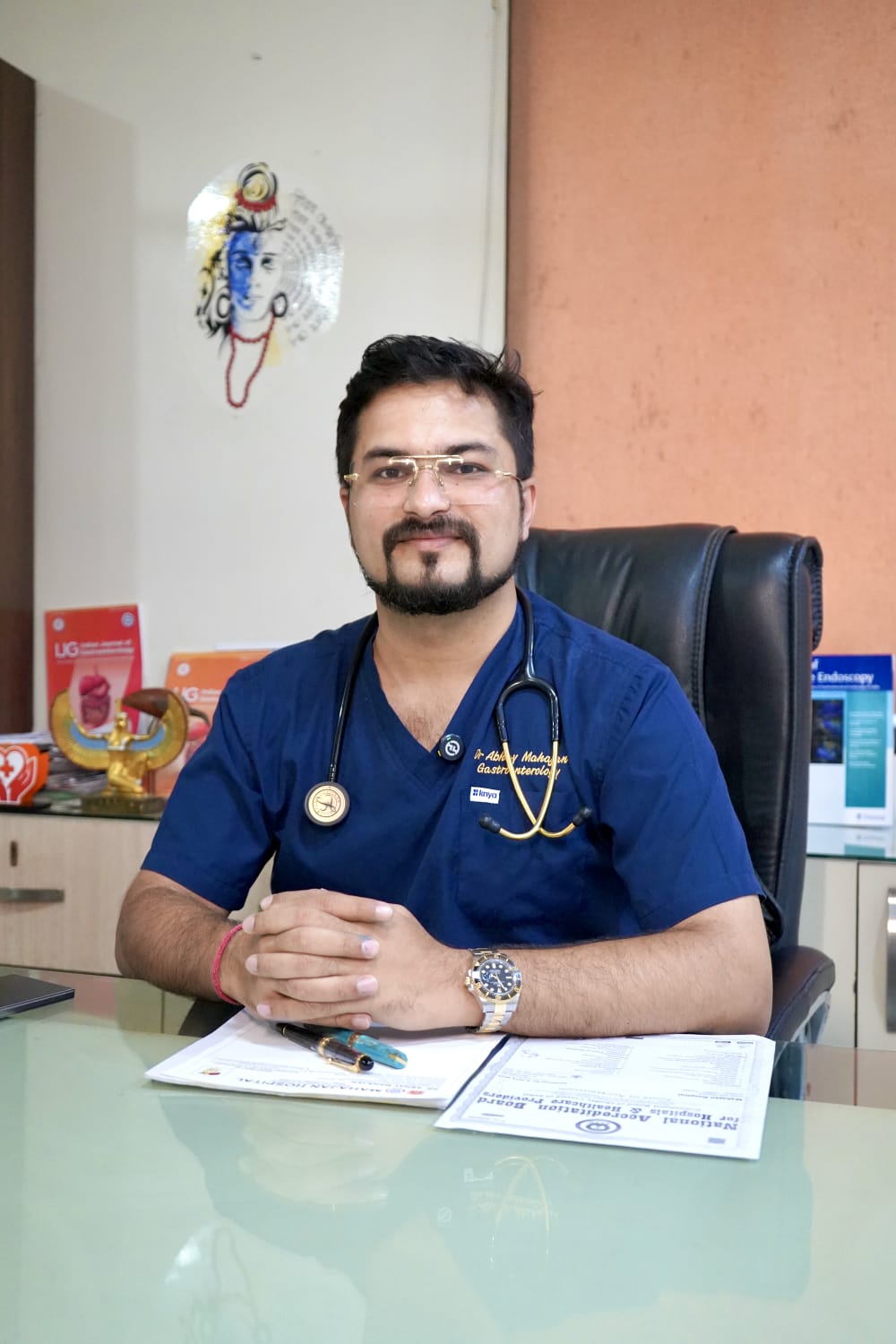
S.No. Name Qualification
1 Dr. Abhay Mahajan MBBS, MD, DM
Why Choose Us?

Expert Team

Our gastroenterologists are highly trained and experienced in managing a wide range of digestive and liver disorders.

Advanced Technology

We use state-of-the-art diagnostic and therapeutic equipment to ensure accurate diagnoses and effective treatments.

Personalized Care

We prioritize patient comfort and well-being, providing customized treatment plans tailored to each individual’s needs.

Comprehensive Support

From initial consultation and diagnosis to treatment and follow-up care, we offer a seamless continuum of care for our patients.

Patient Education

We believe in empowering our patients with the knowledge and resources they need to understand their conditions and make informed decisions about their health.

At Mahajan Hospital, our Gastroenterology Department is committed to delivering exceptional care with a focus on innovation, compassion, and patient satisfaction. Trust us to provide the highest standard of digestive and liver care for you and your family.

Our Locations

© Mahajan Hospital